
In the demanding environment of overlanding and off-road expeditions, efficient storage is not a luxury—it is a critical operational requirement. As vehicles traverse uneven terrain, unsecured equipment becomes a hazard, and limited space restricts mission capability. This is where a properly engineered vehicle drawer system transitions from an accessory to an essential component of vehicle architecture. The following analysis explores the engineering, material science, and quality frameworks that define high-performance storage solutions for off-road applications.
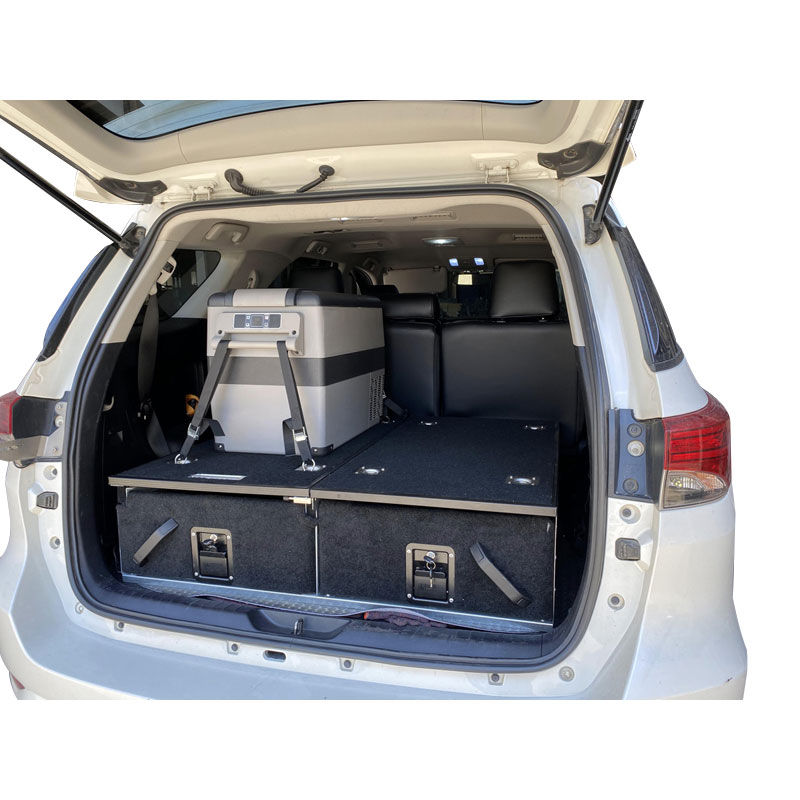
Unlike conventional cargo boxes, a dedicated vehicle drawer system integrates with the vehicle’s structural load path. Engineers design these units to withstand dynamic loads—vertical, lateral, and longitudinal accelerations—often exceeding two times the static load rating. The slide mechanism, typically rated for heavy-duty cycles, employs ball-bearing or roller-bearing races sealed against dust and moisture. Locking features prevent unintended opening during steep ascents or side slopes, while modular dividers allow reconfiguration for tools, recovery gear, or perishable supplies.
High-strength steel or aluminum alloys form the primary chassis of a professional-grade unit. Aluminum offers corrosion resistance and weight savings, essential for maintaining payload capacity. Steel variants provide superior impact resistance for extreme rock-crawling applications. The exterior cladding often utilizes powder-coated sheet metal with anti-slip coating, while internal carpets reduce vibration noise. Fasteners are either stainless steel or zinc-plated to prevent galvanic corrosion when mounted directly to vehicle floor pans.
Every component—from the drawer face to the rear locking plate—must distribute point loads evenly across the vehicle’s mounting points. Poorly designed systems concentrate stress, leading to floor pan deformation or fastener fatigue. A robust design uses spreader plates and reinforced brackets. Additionally, secondary latches prevent accidental release during collisions or sudden braking. Fire resistance and non-toxic material composition are increasingly specified by fleet operators and remote expedition planners.
Field experience demonstrates that organizing gear in a vehicle drawer system reduces setup time by over half compared to loose bag storage. Recovery straps, tire repair kits, and first-aid modules remain instantly accessible without unpacking the entire cargo area. This modularity directly supports winching operations, where seconds matter during vehicle extractions. Furthermore, separating heavy items into lower drawers lowers the vehicle’s center of gravity, improving side-slope stability—a critical safety factor when traversing off-camber trails.
The table below contrasts common cargo management approaches, highlighting functional characteristics without numerical ratings.
| Configuration Type | Access Speed | Load Security | Environmental Sealing | Modular Adaptability |
|---|---|---|---|---|
| Soft Bags / Duffels | Variable | Low | Poor | High |
| Hard Cases (Roof-mounted) | Slow | Medium | Excellent | Low |
| Fixed Shelf with Straps | Medium | Medium | Medium | Low |
| Vehicle Drawer System | Instant | Very High | High | Very High |
As illustrated, the integrated drawer architecture excels in rapid access and load retention—two non-negotiable parameters for professional overlanding, search-and-rescue, or rural utility work. While soft bags offer flexibility, they fail under rollover events or heavy stacking. Hard cases mounted on roof racks shift the center of gravity upward, negatively affecting handling. The vehicle drawer system uniquely combines low-profile mass distribution with immediate tool deployment, making it the preferred choice for experienced off-road operators.
Production of reliable off-road storage systems requires adherence to automotive-specific quality management frameworks. The most rigorous standard is IATF 16949, which focuses exclusively on automotive component manufacturing. This certification mandates defect prevention, continuous improvement, and supply chain control, ensuring that every slide, weld, and fastener meets the same quality level expected of engine or transmission components. Complementary to this is ISO 9001:2015, which provides a broader quality management system applicable to all production phases—from raw material receiving to final packaging.
Certified manufacturers systematically eliminate process variation. For a slide mechanism rated for thousands of cycles without side play, the difference between certified and non-certified production lies in statistical process control (SPC) data, gauge repeatability, and traceability records. When an off-road operator invests in equipment built under IATF 16949, they receive documented evidence that each batch underwent failure mode effects analysis (FMEA) and control plan validation. This translates directly to field reliability—drawers do not jam after dust intrusion, locks do not fail after temperature cycling, and mounting brackets resist corrosion after salt-spray exposure.
A well-designed storage unit does not operate in isolation. It interfaces with the vehicle’s electrical system (e.g., auxiliary battery compartments), pneumatic systems (on-board air compressor housings), and safety restraints (child seat anchor points). Advanced configurations include pass-through cutouts for long items like hi-lift jacks or fishing rods. Some models incorporate integrated power distribution hubs, allowing users to charge handheld radios or refrigerated coolers directly from drawer-mounted USB or cigarette-lighter sockets. Such integration reduces cable clutter and protects connectors from snagging on cargo.
Leading manufacturers subject their vehicle drawer system prototypes to accelerated life testing: repeated opening/closing cycles under dust and vibration, salt-fog corrosion chambers, and static load tests with safety margins. Drop tests simulate impact from sudden trail obstacles, while UV exposure verifies that polymer components do not become brittle. Only after passing these protocols—without crack propagation, fastener loosening, or slide binding—does a design move to production. These empirical methods replace guesswork with engineering certainty, essential for remote travel where replacement parts are not available.
No single drawer dimension fits all vehicle interiors. Cargo area shapes vary significantly between pickup trucks, SUVs, and commercial vans. Therefore, manufacturers offering OEM and ODM services provide tailored solutions: width adjustments to fit between wheel arches, step-down heights for split-tailgate vehicles, or recessed handle designs for flush fitment under tonneau covers. Custom laser-cut patterns allow mounting of specific brands of refrigerators, water tanks, or power stations. For fleet operators, company logos can be embossed on drawer fronts, and lock cores can be keyed alike across multiple vehicles.
Precision sheet metal processing is the backbone of any durable drawer chassis. Capabilities include CNC punching, bending, welding, and powder coating. Thicker gauges (e.g., 14-gauge steel) provide impact resistance for recovery gear storage, while thinner, cold-rolled steel (16-gauge) suits lighter accessory drawers. Aluminum variants use 5052 or 6061 alloys, often with anodized or powder-coated finishes. Riveted assemblies offer vibration resistance, whereas welded structures provide maximum rigidity. The choice depends on the intended operational environment—rock crawling vs. gravel road touring vs. marine-adjacent use.
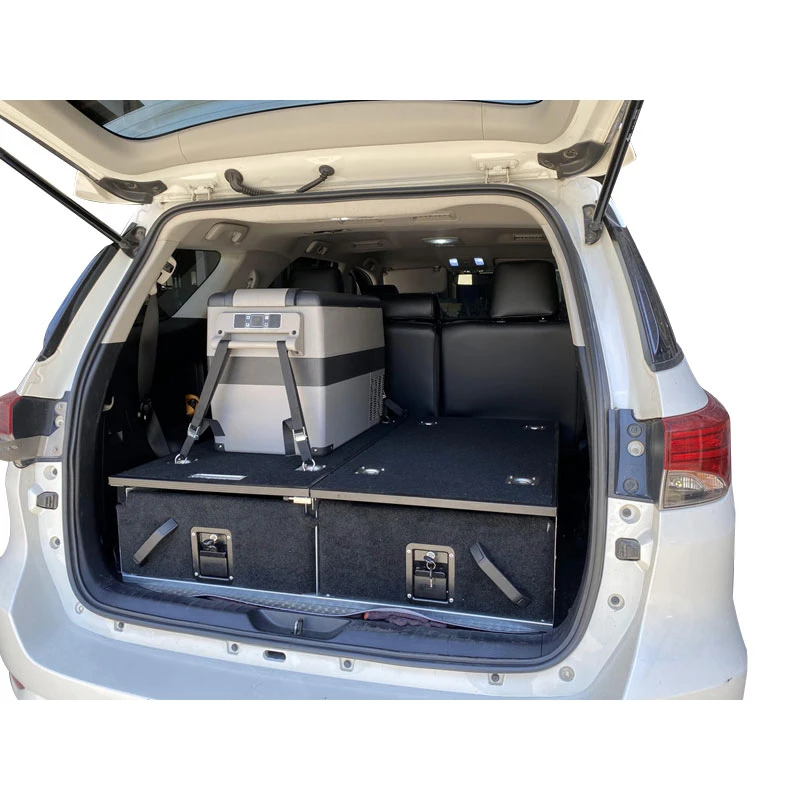
Ningbo Aosite Automotive Co., Ltd., established in 2007, focuses entirely on the production of off-road vehicle accessories and sheet metal products. Their portfolio includes winch accessories, exterior vehicle attachments, and outdoor equipment, all supported by OEM and ODM services. Experienced engineering staff collaborate closely with clients to translate field requirements into manufacturing specifications. The company holds both IATF 16949 and ISO 9001:2015 certifications, ensuring that every vehicle drawer system and sheet metal component meets automotive-grade quality benchmarks. From initial design consultation to final inspection, the organization maintains strict quality control protocols and responsive customer support. For off-road operators demanding secure, accessible, and durable storage, Ningbo Aosite delivers solutions engineered to withstand harsh environments while simplifying gear organization. Their integrated approach—combining metal fabrication, quality management, and application-specific design—positions them as a reliable partner for global vehicle accessory needs.


